Foraging in Italy operates within a layered regulatory framework: a national decree sets the baseline, and each of the twenty regions then legislates more specifically — covering daily quantity limits, permit requirements, restricted species and access rules for protected areas. Understanding this structure matters practically, because the rules in Tuscany differ meaningfully from those in Trentino-Alto Adige, and what is freely permitted in an Apennine municipal forest may be prohibited or permit-restricted in an adjacent national park.
This article provides two things: a seasonal calendar showing what is typically available month by month across Italy's main foraging habitats, and a structured overview of the regulatory framework with notes on the regions that have the most distinctive rules.
Seasonal Calendar
The calendar below covers the major categories of edible wild species. Altitude and latitude shift the windows — at 1200 m in the northern Apennines, spring herbs may arrive four to six weeks later than at sea level in Sardinia or Sicily. These are indicative ranges for lowland to mid-altitude central Italy.
January – February
Limited activity. In mild years and at low altitudes (coastal Liguria, Sardinia, Sicily), some winter-hardy herbs can be found: young dandelion rosettes in sheltered spots, occasional stinging nettle on south-facing banks. Mushroom activity is largely dormant except for winter species such as Pleurotus ostreatus (oyster mushroom) on dead deciduous wood. Sloe berries (Prunus spinosa) persist on bare branches and can be collected through winter.

March – April
The main spring herb season begins. Stinging nettle is at its most tender through March across most of Italy; wild asparagus spears emerge on dry hillsides and scrubland margins from late February in the south and through April in central Italy. Dandelion, wild garlic (Allium ursinum) in cooler, damp woodland, and hop shoots (Humulus lupulus) are all active. At lower altitudes in the south, wild fennel fronds are already producing spring growth.
May – June
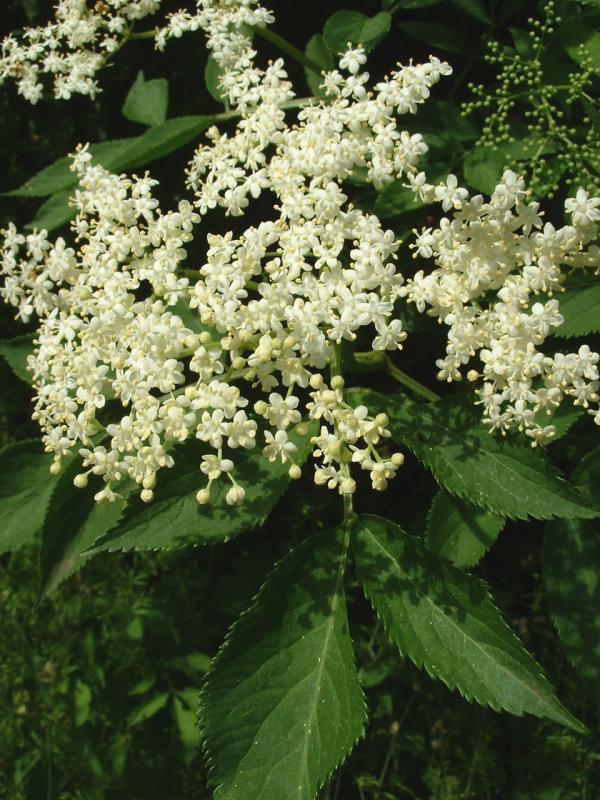
The tail end of spring herb season. Elderflowers (Sambucus nigra) appear in May–June at mid-altitudes — heads collected before fully open for fritters and cordials. Wild strawberries (Fragaria vesca) ripen in sunny woodland clearings from May onward. The first summer mushroom flush can appear at higher altitudes following June rain — chanterelles and some boletes.

July – August
The summer mushroom season at altitude (1000–1800 m). In the Dolomites, the Aosta Valley and the higher Apennines, this is a productive window for porcini, chanterelles and Caesar's mushroom. At lower altitudes, summer heat suppresses most herb growth. Wild fennel seeds are collected unripe in July–August. Elderberries ripen from August in central Italy.
September – November
The primary mushroom season across the whole of Italy. September–October sees the main porcini flush in the Apennines and Alpine foothills following the first autumn rains. Chanterelles, field mushrooms and Caesar's mushroom are also at their most abundant. Chestnuts (Castanea sativa) fall from late September and are both collected for food and provide a key nutrient source that supports the fungal network in chestnut woodland. Sloe berries ripen after the first frosts.

December
The season closes. In milder years and coastal areas, some late mushroom activity persists into early December. Winter herbs begin their dormancy. The focus for many foragers shifts to preserved and dried material collected earlier in the year.
The Regulatory Framework
National baseline: D.P.R. 376/1995
The primary national instrument is the Decreto del Presidente della Repubblica n. 376 del 14 luglio 1995, which establishes the general framework for mushroom collecting specifically. Key provisions:
- Personal-use collection (raccolta a scopo amatoriale) is permitted without a commercial licence
- Regions are empowered to set daily quantity limits, permit requirements and restricted areas
- Collection in national parks and state-managed nature reserves requires compliance with the park's own management plan
- Commercial collection requires a separate commercial permit issued by regional authorities
Regional variation
The following gives a practical summary of how selected regions treat personal-use foraging:
Tuscany (Toscana)
Tuscany has one of the more formalised permit systems. A regional foraging permit (tesserino regionale) is required to collect mushrooms in regional and municipal public forests. The permit is issued by ASL (local health units) or authorised vendors and costs approximately €50–70 per year. The daily mushroom limit is 3 kg. Wild herbs are generally not permit-restricted for personal quantities. Garfagnana and the Casentino valley within the Foreste Casentinesi National Park have additional restrictions.
Trentino-Alto Adige
Strict permit requirements apply in both provinces. In Trentino, a permit is mandatory for all forest collection including wild herbs in several protected zones. The daily mushroom limit is 2 kg. The mountainous terrain means a significant proportion of the productive area falls under protected-area rules. The Adamello-Brenta Natural Park and Stelvio National Park apply their own internal limits, often lower than the regional baseline.
Veneto
A regional permit is required for mushroom collection on state and regional public land. Several provincial parks apply additional zone-specific restrictions. The daily limit is 3 kg. Wild asparagus collection is unrestricted for personal quantities.
Calabria and Sicily
Generally less formalised permit requirements for personal-use herb and mushroom collecting on non-protected public land. However, the Sila National Park (Calabria) and Madonie Regional Park (Sicily) apply their own restrictions. Several endemic plant species in Sicily's coastal areas are protected under regional biodiversity ordinances — collecting any bulbous or geophyte plant in these areas without checking against the protected species list carries risk.
Sardinia
No regional foraging permit is required for personal-use collection of herbs and mushrooms on public land outside protected areas. The island's unique flora includes several endemic species — notably some Sardinian endemic alliums and geophytes — that are protected under regional law. The Gennargentu National Park and Barbagia reserves apply specific entry and collecting rules.
Practical Compliance Checklist
Before collecting in any Italian region, work through the following:
- Check if a permit is required in the specific region and land type (public forest, regional park, national park, private land)
- Verify the daily quantity limit for the category of species you plan to collect
- Check for protected species in the regional annex — particularly relevant for bulbous herbs, orchids and certain ferns
- Confirm access rules for the specific area — some parks require registration or restrict collecting to designated zones
- Use appropriate containers — breathable baskets or paper bags; plastic bags are prohibited in several regions specifically for mushroom collecting
The authoritative source for current regional rules in each case is the relevant regional forestry authority or the local Carabinieri Forestali station. Regulations are updated annually and sometimes seasonally, so checking at the start of each foraging season is advisable.
For species-specific identification notes, see the companion articles: A Practical Guide to Edible Wild Herbs of Italy and Edible Mushrooms of Italian Forests.